
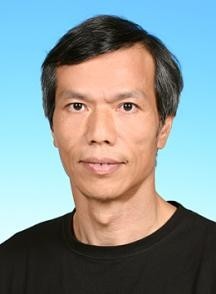
James Tin-Yau Kwok, FIEEE
The Hong Kong University of Science and Technology, China
Prof. Kwok is a Professor in the Department of Computer Science and
Engineering, Hong Kong University of Science and Technology. Prof. Kwok served / is serving
as an Associate Editor for the IEEE Transactions on Neural Networks and Learning Systems,
Neurocomputing, Artificial Intelligence Journal, International Journal of Data Science and
Analytics, and Action Editor of Machine Learning. He is also serving as Senior Area Chairs
of major machine learning / AI conferences including NeurIPS, ICML and ICLR. He is
recognized as the Most Influential Scholar Award Honorable Mention for "outstanding and
vibrant contributions to the field of AAAI/IJCAI between 2009 and 2019". He is an IEEE
Fellow, and the IJCAI-2025 Program Chair.
Speech Title: Multi-Objective Deep Learning
Abstract: Multi-objective optimization (MOO) aims to optimize multiple conflicting
objectives simultaneously and is becoming increasingly important in deep learning. However,
traditional MOO methods face significant challenges due to the non-convexity and high
dimensionality of modern deep neural networks, making effective MOO in deep learning a
complex endeavor. In this talk, we address these challenges across two deep learning
applications. First, we introduce Pareto Merging to address the limitations of traditional
"one-size-fits-all" model merging. By formulating merging as a MOO problem, where
performance on each base model's task is an individual objective, our parameter-efficient
structure generates a diverse Pareto set of merged models in a single run, allowing users to
select optimal trade-offs tailored to their specific preferences. Next, we demonstrate that
LLM pruning can also be framed as a MOO problem. We introduce Multi-Objective One-Shot
Pruning (MOSP). Unlike single-objective pruning methods that ignore the multi-faceted nature
of LLM capabilities, MOSP identifies shared core support while enabling specialized support.
This produces a Pareto set of pruned models, enabling preference-aware resource-constrained
deployment in an efficient manner. Experimental results across both applications demonstrate
superior performance in navigating complex trade-offs compared to state-of-the-art
baselines.
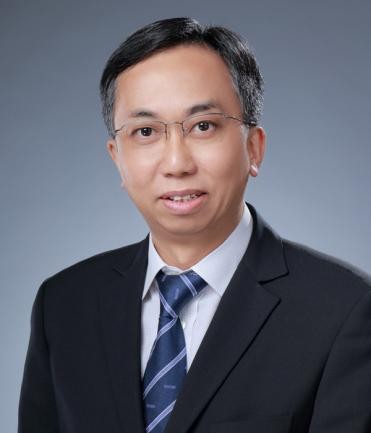
Simon K.S. Cheung, FBCS, FIMA, FIET, FHKIE, FHKCS
Hong Kong Metropolitan University, China
Currently the Chief Information Officer in Hong Kong Metropolitan University,
Dr. Simon K.S. Cheung has been working in the higher education sector for over 30 years in
various administrative capacities, mainly in IT and educational technology, while also
undertaking academic duties such as teaching, research, course development, and programme
accreditation. He received his BSc and PhD in Computer Science, and Master of Public
Administration from City University of Hong Kong and University of Hong Kong respectively.
Dr. Cheung had been admitted as IET fellow, IMA fellow, BCS fellow, HKIE fellow, HKCS
fellow, and IEEE senior member. He is active in research, with over 200 publications in two
distinct areas, namely, software and systems engineering, and innovation and technology in
education. Among other consultancy roles, he serves in the advisory board and editorial
board for reputable international journals in these areas, including ETHE (SSCI, Q1), AJET
(SSCI, Q1), and SN Computer Science (Scopus, Q1). Awards in recognition of his achievements
include the Outstanding Research Publication Award from Hong Kong Metropolitan University,
Outstanding CIO Award from Hong Kong IT Joint Council, and Honour for Excellence, CIO Award
from the CIO Asia.
Speech Title: Challenges and Opportunities for Open Access Textbooks in the Age of
Intelligence
Abstract: As one form of open educational resources, open access textbooks have been
adopted as the traditional digital or printed textbooks for both higher education and K-12
education. Besides the core values on open and free access, the 5Rs (retain, re-use, revise,
re-mix and re-distribute) provision via open licensing arrangements are the definite
advantages of open access textbooks. With the advent of new AI technologies in recent years,
it is time for educational researchers and practitioners to revisit open access textbooks,
especially on the challenges and opportunities. This presentation reviews the operation
model of open access textbooks, including their set-up, sourcing and updating of contents,
open licenses, usages, content review and quality assurance, and discusses how AI
technologies bring new opportunities for improving efficiency in content creation and
adaptation, continuous content development. It would also be discussed on new challenges on
content review and quality assurance, and the necessary measures for sustaining the core
values and advantages of open access textbooks, including availability of open accesses,
provision of open licensing, and authentic assurance of contents.
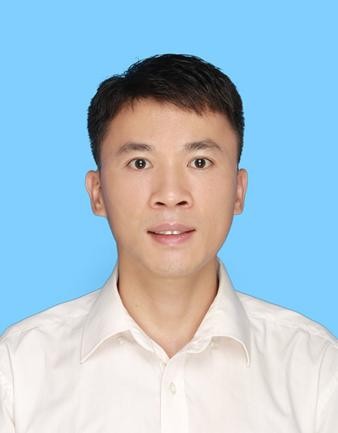
Junliu Zhong, IEEE Member
Guangzhou Maritime University, China
Dr. Junliu Zhong, IEEE Member, is a Computer Science Ph.D., Distinguished
Research Fellow, and Associate Professor at Guangzhou Maritime University, where he serves
as Dean of the IoT Department. Over the past four years, he has led multiple key provincial
research projects and published 13 high-impact papers in top journals such as IEEE TIFS,
Pattern Recognition, Information Sciences, and IPM, including 7 SCI Q1 top tier papers. His
research focuses on artificial intelligence, information security, and multimedia
processing. Dr. Zhong is a core member of a national level teaching innovation team, a
recipient of the First Prize of Guangdong Provincial Teaching Achievement Award, and an
active reviewer for several SCI journals.
Speech Title: From Silent Segments to Edge Deployment: Advances, Challenges, and
Future Trends in Replay Speech Detection
Abstract: With the widespread deployment of voice biometric systems in
security-critical applications, Automatic Speaker Verification (ASV) faces escalating
threats from replay attacks. These attacks, characterized by minimal implementation cost and
high concealment, can effortlessly circumvent identity authentication mechanisms, thereby
posing severe security risks. This report presents a systematic review of the evolution of
replay speech detection technology, tracing its trajectory from early
signal-processing-based feature engineering—exemplified by Mel-scale Frequency Cepstral
Coefficients, Constant Q Cepstral Coefficients (CQCC) and Linear Frequency Cepstral
Coefficients (LFCC)—through the deep learning era's end-to-end neural architectures, notably
the RawNet family, to contemporary self-supervised learning (SSL) backbone networks such as
wav2vec 2.0, WavLM, and HuBERT.
Our presentation centers on cutting-edge research
frontiers, including the exploitation of silent segments to extract device-specific
fingerprints and the application of attention mechanisms for discriminative feature
enhancement. Additionally, we investigate lightweight deployment strategies—encompassing
knowledge distillation, model pruning, and quantization—designed to enable real-time,
low-latency inference on resource-constrained edge devices. Finally, we identify critical
unresolved challenges, including cross-device generalization, adversarial robustness, and
multimodal fusion, while charting future directions toward audio large language models,
physical-layer forensics, and unified detection frameworks that seamlessly integrate
multiple defense modalities.
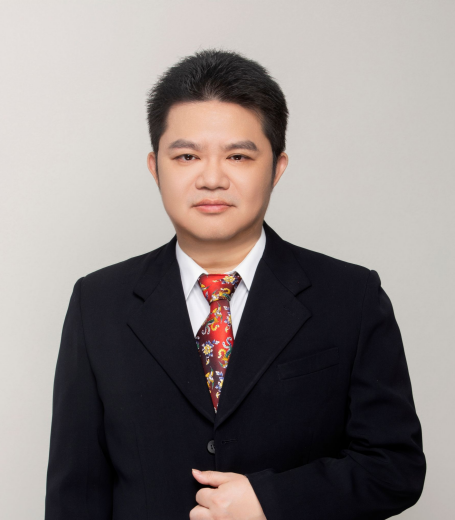
Longkai Wu, IEEE Member
Central China Normal University, China
Longkai Wu is a professor Central China Normal University, Wuhan, China. He holds a Doctor
of Philosophy degree from Nanyang Technological University (NTU), Singapore. His research
interests include Artificial Intelligence in Education, Virtual and Augmented Reality,
Formal and Informal Learning, STEM, Learning by Inquiry, Information Technology and Policy
in Education.
Professor Wu has led and co-led several Singapore National Research Foundation and Ministry
of Education funded research projects totaling over S$3 million. He has led the publication
of three Springer books and published over 100 international journal articles, international
book chapters and top conference papers.
At CCNU, Professor Wu serves as Deputy Director for Research Management of Social Sciences
and Humanities at the Center, while also assisting the Faculty of Artificial Intelligence in
Education in developing and supporting its undergraduate programs in Data Science and Big
Data Technology and Artificial Intelligence.
Speech Title: Emerging Paradigms for Future Learning with AI Empowerment
Abstract: The digital intelligent era is reshaping industries and posing new
challenges to education. Driven by generative AI and large language models, growing demands
for talents’ core competencies require the transformation of traditional learning paradigms.
Against the backdrop of industrial evolution and talent competency reform, this keynote
analyzes the necessity of paradigm renewal. It explores deep AI education integration across
teaching, learning, research, management, assessment, educational resources and
environments, with practical cases of smart classrooms, AIGC enabled resources and humanAI
co teaching. Future learning will feature immersion, personalization and humanAI
collaboration. Education shall prioritize fostering learners’ higher order competencies to
adapt to an AI empowered society.